






Summary
This article outlines seven critical warning signs of brake fluid problems, including visible leaks, illuminated warning lights, a soft brake pedal, and longer stopping distances. It explains how brake fluid works, the importance of different DOT fluid types, and the dangers of moisture contamination. The article also provides solutions for each problem and emphasizes the importance of a regular preventive maintenance schedule to ensure vehicle safety and avoid costly repairs.
Key Points
- Brake fluid is essential for your car’s stopping power; issues can lead to serious safety hazards.
- Watch for visible fluid leaks, illuminated warning lights, and a soft or sinking brake pedal.
- Moisture contamination in brake fluid can lower its boiling point, leading to reduced braking efficiency and corrosion.
- Regular brake fluid checks, flushes, and inspections are crucial for preventive maintenance.
- Addressing brake fluid problems promptly can prevent major repairs and ensure safe driving.
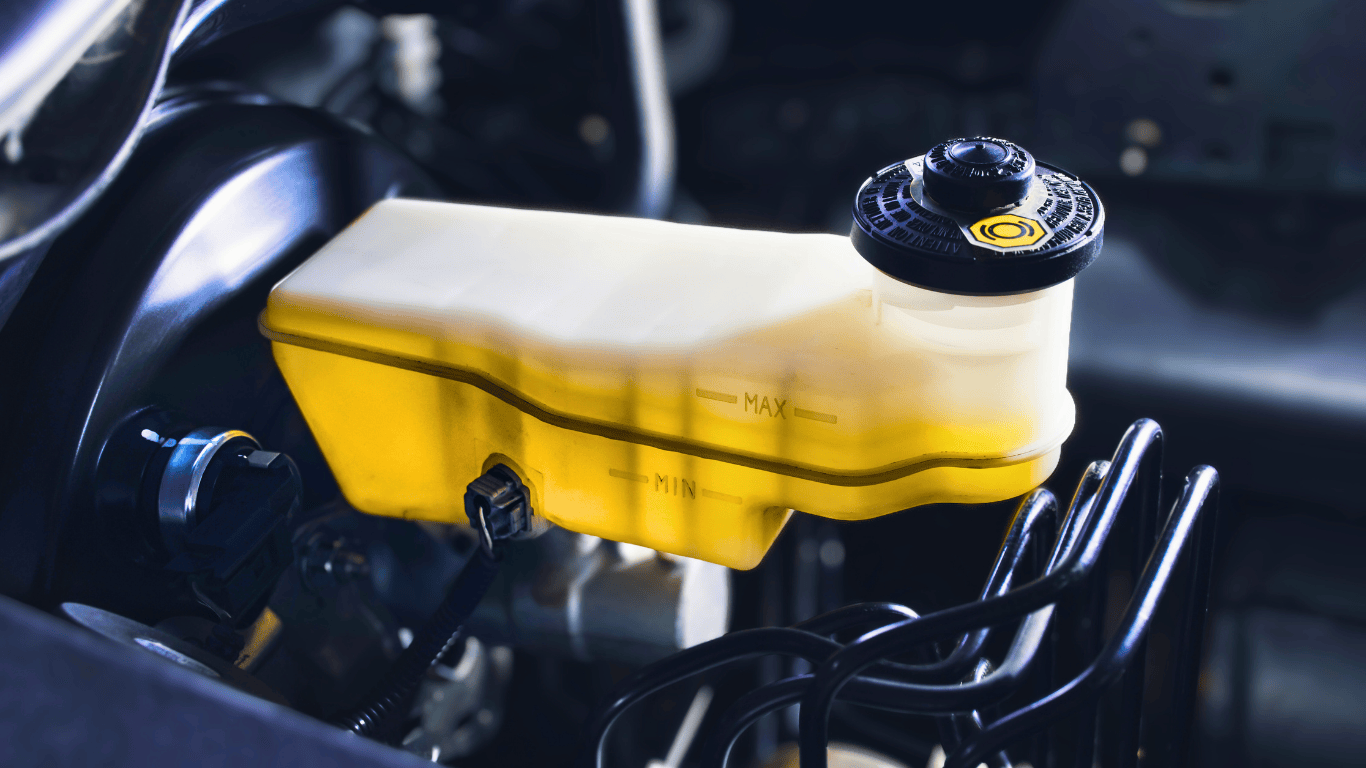
Rigorous brake-fluid maintenance is widely recognized as a crucial preventive measure against brake-related failures; yet, most drivers never give that small, translucent reservoir a second glance until something goes wrong.
When brake fluid becomes low, contaminated, or leaks out, the hydraulic force that stops your car weakens, leading to potentially expensive repairs or even more serious brake failure.
Understanding warning signs, what they mean, and when you can handle a quick fix versus when professional help is essential could save your life and your wallet.
Brake Fluid 101: Why It Matters and How It Works
Think of brake fluid as your car’s bloodstream. Every time you press the pedal, hydraulic pressure rushes through narrow lines to deliver stopping power to each wheel.
Because liquids don’t compress, that pressure travels instantly from your foot, through the master cylinder, to the calipers or wheel cylinders that clamp the rotors or drums.
If a leak allows air to sneak in, the system loses its rock-solid pressure. The pedal feels spongy, and a dashboard warning light often signals low fluid or pressure loss.
Never ignore this warning. Total brake failure can follow quickly.
Understanding DOT Fluid Types
Not all brake fluids are created equal. Most passenger cars use glycol-based DOT 3 or DOT 4, while high-performance or heavy-duty systems often require DOT 5.1.
Each step up brings a higher dry and wet boiling point, meaning greater resistance to the searing heat generated during hard stops.
This heat can easily top 400°F on mountain descents or during repeated panic braking.
The Moisture Problem
Fresh fluid fights moisture, but hydraulic fluid is hygroscopic, slowly absorbing water from the air. This lowers its boiling point and darkens the fluid, changing it from clear amber to a murky brown.
That’s why most manufacturers recommend a complete flush every two years and why any sign of a leak demands immediate professional attention.
Ignoring moisture contamination risks vapor lock, corrosion, and catastrophic failure of the stopping system. The stakes are too high to wait.
7 Early Warning Signs of Brake Fluid Problems You Should Never Ignore
Hydraulic fluid problems in your car’s braking system often don’t happen overnight.
Instead, your vehicle gives you warning signs that, if addressed promptly, can save you from costly repairs and dangerous situations.
Here are seven key signs of hydraulic system trouble, what they mean, and the necessary steps to take:
1. Visible Fluid Puddle Under the Car
A clear or amber oily patch beneath your car is a sign of hydraulic fluid leakage. Fresh hydraulic fluid is nearly clear with a slight yellow tint, and as it ages, it turns amber, then dark brown.
Even small drips can be a sign of a serious issue, as hoses and lines can fail unexpectedly, resulting in a rapid loss of pressure.
Solution: Inspect the area under the car to trace the source of the leak. A small drip can quickly escalate into a major issue if left untreated. Get the leak repaired immediately to prevent total failure of the hydraulic system.
2. Illuminated Brake Warning Light
When your brake system’s sensors detect low fluid levels or uneven pressure, the brake warning light or ABS light will illuminate. This indicates that your safety margin has already been compromised, even if your pedal feels normal.
Solution: Do not ignore the warning light. Bring your car in for immediate inspection to determine the cause, whether it’s low fluid, air in the lines, or an issue with the ABS system.
3. Soft or Spongy Brake Pedal
If your brake pedal feels soft, spongy, or goes down too far, air or moisture may have entered the hydraulic system. This makes the brake fluid compressible, reducing your ability to stop efficiently.
Solution: This is a sign of contaminated or leaking hydraulic fluid. It’s crucial to get the system flushed and checked for leaks, as the issue could lead to severe braking failure if left unchecked.
4. Pedal Slowly Sinks While Stopped
If the brake pedal sinks gradually when you are stopped at a red light or in traffic, this may indicate a failing master cylinder or an internal leak.
Solution: This is a serious issue that requires immediate attention. A sinking pedal can lead to complete loss of braking power, so stop driving and have your vehicle towed to a repair shop.
5. Rapidly Dropping Reservoir Level
If you notice that the brake fluid reservoir drops below the “MIN” line more frequently, it’s a sign that your hydraulic system is losing fluid due to a leak.
Solution: Monitor the fluid level closely and check for visible leaks. If the fluid level is consistently low, a professional inspection is necessary to identify and repair the leak before it causes further damage or total system failure.
6. Burning Smell or Smoke After Braking
A sharp chemical odor or light smoke coming from your wheels after heavy braking usually indicates that your brakes have overheated. This is often caused by issues such as stuck calipers or excessive friction, rather than being directly related to hydraulic fluid.
Solution: While this is not always related to the fluid, overheating can lead to further complications in your braking system. Have your brake components checked for wear, and address any problems that could lead to further damage.
7. Longer Stopping Distance
If you find that your car needs more road to come to a stop or you have to apply more force to the pedal, this could signal degraded brake fluid. The fluid’s ability to transmit force is weakened by moisture contamination.
Solution: Consider getting a brake fluid flush to remove moisture-laden fluid and improve stopping performance. If this problem persists, it’s essential to have a full inspection of the brake system to rule out any underlying issues.
Preventive Maintenance Schedule and Best Practices
Regular hydraulic fluid checks prevent expensive repairs. Follow this schedule and adjust only if your owner’s manual requires more frequent service.
Maintenance Schedule:
- Every 3 Months (or at each oil change): Check the translucent reservoir to ensure fluid sits near the “MAX” line and looks clear to pale yellow. Any drop toward “MIN” or dark coloration needs immediate attention. Scan the wheels and ground for damp, slick spots—early signs of leaks. Perform a gentle stop on a quiet street to confirm the pedal feels firm.
- Yearly: Use a specialized electronic moisture meter to ensure brake fluid water content stays under 3 percent. Inspect metal lines and rubber hoses for rust, cracks, or chafing. Book a professional inspection if your vehicle is more than five years old or has a history of heavy towing.
- Every 2 Years / 24,000 Miles: Schedule a complete fluid flush and bleed. This interval prevents moisture-induced boiling-point drop and internal corrosion. Replace any hose that feels soft or shows surface cracks.
Coast whenever possible, avoid riding the pedal downhill, and give the system a moment to cool after hard stops. Heat accelerates fluid degradation, so smoother inputs equal longer fluid life.
Hydraulic fluid begins absorbing moisture as soon as you open the container. Keep unopened bottles upright in a cool, dry cabinet and cap them immediately after use.
Residual air can ruin a quart in weeks. Inspect any container that’s been open for more than a year for signs of contamination or degradation before deciding whether to discard it.
Catching Brake System Problems Early
Recognizing these warning signs and addressing them promptly can prevent significant damage and ensure your car continues to run safely.
Hydraulic system issues, especially with your brakes, should never be ignored, as they directly impact your ability to drive safely. Whether it’s a minor fluid leak, a spongy pedal, or a soft brake, prompt action can save you from major repairs and potential safety hazards.
If you’re experiencing any of these symptoms or need an inspection, don’t hesitate to explore Sunbit’s auto repair directory to find trusted mechanics near you who can help address the issue and keep your vehicle in top condition. Your safety is worth the investment.