



Summary
This article provides an in-depth guide to whitening smokers’ teeth, addressing the causes of yellow and brown stains—primarily tar and oxidized nicotine—and offering a range of solutions from DIY methods to professional treatments. It also highlights the broader oral health risks associated with smoking, such as periodontal disease, tooth loss, oral cancer, and dry mouth. The guide details various whitening options, including baking soda rinses, specialized toothpastes, peroxide strips, professional cleanings, custom trays, and chairside power bleaching, with considerations for cost, effectiveness, and longevity for smokers. Finally, it emphasizes a daily care routine to prevent new stains and offers FAQs about maintaining oral health while smoking.
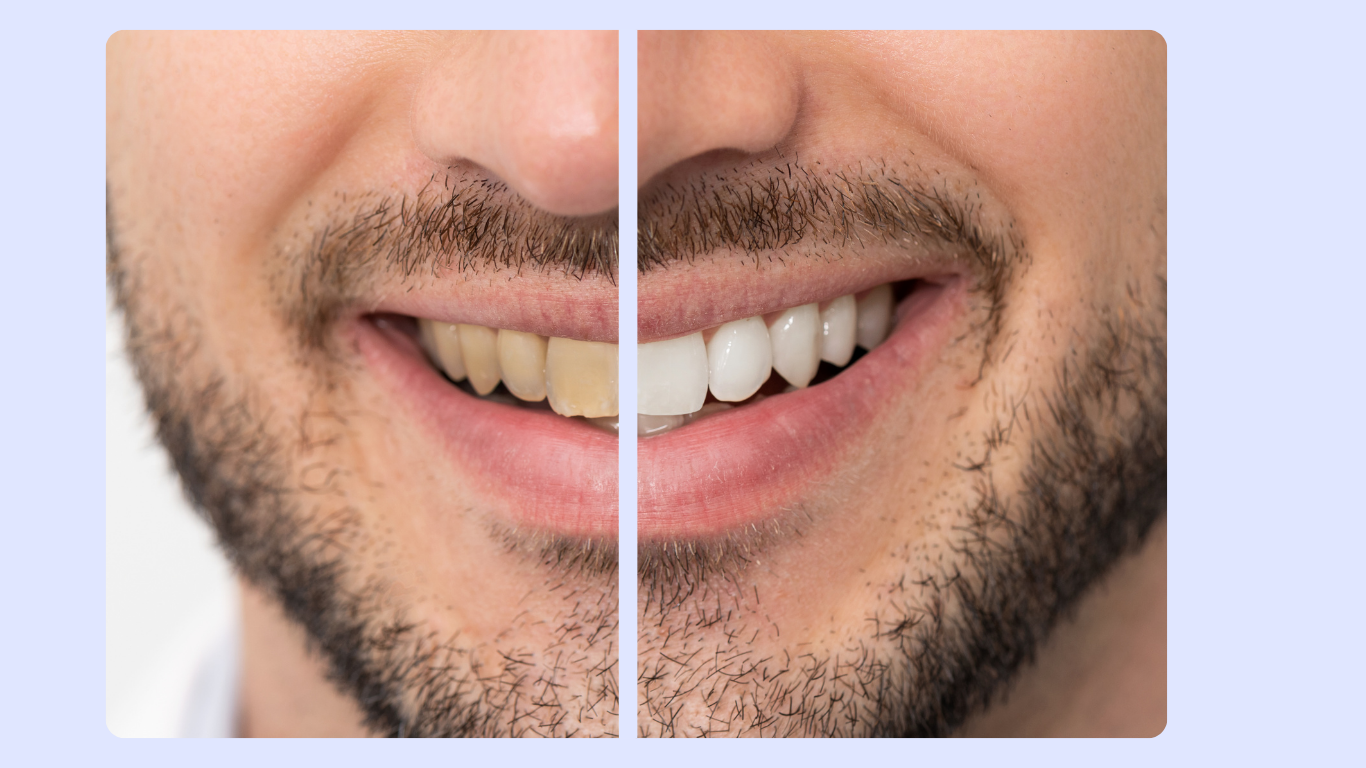
Yellow, brown, even near-black streaks on smokers’ teeth aren’t permanent. Tar and oxidized nicotine embed themselves into enamel, but they can be lifted or blocked, whether your budget is a few dollars for baking soda or a few hundred for professional power bleaching.
This guide walks you through proven, wallet-friendly fixes and daily habits that keep fresh stains from taking hold.
No judgment here, just practical steps grounded in science and real-world experience.
Why Smoking Turns White Teeth Yellow (Then Brown)
Light up a cigarette, and two key culprits, nicotine and tar, come into instant contact with your smile.
While nicotine in tobacco is typically colorless to pale yellow, the main cause of yellow-brown stains on teeth from smoking is tar, which is dark and sticky and penetrates the porous enamel surface, accumulating in microscopic grooves beyond the reach of a toothbrush.
With steady exposure, stains shift from off-white to dull yellow, then to a muddy brown that can edge toward black in long-term heavy smokers. Heat compounds the problem.
Each drag warms and dries your mouth, suppressing saliva, the natural rinse system that normally washes pigments away. Less saliva means more time for nicotine, tar, benzene, and polycyclic aromatic hydrocarbons to bond tightly to enamel and dental fillings alike, which is why composites in smokers often discolor faster than natural teeth.
All forms of tobacco, including cigarettes, cigars, pipe smoke, smokeless tobacco, and some vape juices, can contribute to dental staining, though the specific staining molecules and their mechanisms vary between products.
Over time, the color shift becomes so entrenched that simple whitening toothpastes struggle, and professional cleanings may be your only route back to lighter shades.
Hidden Oral Health Dangers Beyond Stains
Smoking affects much more than just the color of your teeth. When you smoke, thousands of chemicals come into contact with your gums, tongue, and throat, setting the stage for a range of long-term oral health issues.
Here’s how smoking impacts your oral health in ways that go beyond surface stains:
Periodontal Disease
The most significant risk smoking poses is to your gums. Smokers are two to three times more likely to develop serious gum infections than non-smokers. Nicotine causes blood vessels to constrict, reducing blood flow and oxygen to the gum tissue.
This weakens the gums, making them more susceptible to infection. Meanwhile, tar from cigarettes alters the bacterial balance in the mouth, turning plaque into a more harmful substance.
As a result, infections can persist and spread, and wounds, such as those from extractions, implants, or deep cleanings, may heal much more slowly or not at all.
Increased Risk of Tooth Loss
Smokers also face a significantly higher risk of tooth loss. The combination of reduced blood flow, weakened immune response, and the aggressive plaque buildup caused by smoking leads to severe gum disease, which can result in teeth becoming loose or falling out.
Oral Cancer: A Life-Threatening Risk
Beyond the gums, smoking significantly increases the risk of oral cancer. Regular tobacco use can increase your lifetime risk of developing squamous-cell carcinoma by up to seven times.
This risk is even higher when smoking is combined with alcohol consumption. Early-stage oral cancers are often painless and can start as small patches on the tongue, cheeks, or throat, which can go unnoticed until the cancer has spread.
Dry Mouth: Amplifying the Damage
Smoking also contributes to dry mouth, a condition where your mouth doesn’t produce enough saliva. The heat and chemicals from cigarettes shrink your salivary glands, reducing saliva’s ability to wash away food particles and neutralize acids.
This creates the perfect environment for cavities, particularly along the gum line where the enamel is thinnest. Without saliva’s natural defense, the pH in your mouth shifts towards decay.
Whitening Options: Step-by-Step Solutions From DIY to In-Office
Tobacco stains sink deep, so the best whitening plan matches both your budget and the intensity of your habit.
Here’s your roadmap from the cheapest options to professional-grade solutions:
DIY Baking-Soda Rinse (Free)
Stir ½ teaspoon of baking soda into a cup of water and swish for 30 seconds twice a week. The mild alkalinity lifts fresh surface stains without scratching enamel when used sparingly, a trick many tobacco users rely on for a quick refresh.
Results are subtle (think a half-shade brighter) and usually fade within a month if you keep using tobacco. But it’s free and gentle on your teeth.
Smokers’ Toothpaste with Micro-Polish Silica ($4–$12)
These formulas use fine silica or calcium carbonate to scrub off the yellow film left by tar and nicotine. You’ll notice a small but immediate bump in brightness after the first week, provided you brush for a full two minutes twice daily.
Since tobacco use roughens enamel, stick to pastes rated “low abrasion” to avoid thinning your tooth’s outer layer.
OTC Peroxide Strips or LED Kits ($30–$80)
Hydrogen-peroxide strips (left on for 30 minutes daily) or LED mouthpiece kits can lighten teeth one to three shades in 10–14 days.
The catch: nicotine continues to redeposit pigment, so heavy users often need a fresh box every two to three months, about twice as often as non-smokers.
Professional Cleaning with Air Polishing ($75–$150)
During a routine hygiene visit, your hygienist blasts a baking-soda or erythritol powder slurry onto the enamel, stripping away weeks of tar in minutes.
You leave the office noticeably brighter, and the polishing also smooths the surface so new stains take longer to stick.
Expect the “just-cleaned” look to last three to six months if you use tobacco lightly, or as little as eight weeks for a pack-a-day habit.
Custom Take-Home Trays, 10% Carbamide Peroxide ($150–$300)
Your dentist molds trays that hug every contour, allowing a lower peroxide concentration to soak stains for two hours a night. Most tobacco users see a four- to six-shade lift in about two weeks.
Continued use can cut longevity from the usual 18–24 months to roughly nine months, but the results are still impressive.
Chairside Power Bleach ($400–$700)
An in-office session with 25–40% hydrogen peroxide, often activated by a blue light, can erase up to eight shades in an hour. The payoff is dramatic.
Studies show visible re-staining within three months if cigarettes aren’t curtailed, making periodic touch-ups essential.
Important: Skip internet hacks like lemon juice soaks or daily charcoal scrubs. High acidity and harsh grit may etch enamel, allowing even more tar to accumulate over time. Invest instead in regular professional cleanings and remember that every cigarette you skip extends the life of your whitening results.
| Method | Cost | Shade Boost | Typical Longevity for Smokers |
|---|---|---|---|
| Baking-soda rinse | Free | ½–1 | 2–4 weeks |
| Smokers’ toothpaste | $4–$12 | 1 | 4–6 weeks |
| OTC strips / LED | $30–$80 | 1–3 | 2–3 months |
| Pro cleaning + air polish | $75–$150 | 2–3 | 2–6 months |
| Custom trays | $150–$300 | 4–6 | 9–12 months |
| Chairside bleach | $400–$700 | Up to 8 | 6–12 months |
Daily Care Routine to Prevent New Stains
Preventing new stains on your teeth requires more than just an occasional whitening treatment—it takes consistency and the right daily care routine. Tobacco use can lead to yellowing over time, but with the right habits, you can help prevent discoloration and maintain a bright smile.
Start Your Day Right
A solid morning routine is key to preventing tobacco stains. Begin by brushing for 2 to 3 minutes with a fluoride toothpaste designed specifically for tobacco users. These special pastes contain micro-polish silica that helps lift fresh tar film without damaging the enamel.
Tip: Investing in a budget-friendly electric toothbrush is a great choice. It removes up to twice as much plaque as a manual brush, which is crucial since tobacco users tend to produce stickier plaque that hardens more quickly.
Midday Maintenance
Throughout the day, keep your mouth fresh with a midday rinse using an alcohol-free fluoride mouthwash. This helps wash away oxidized nicotine before it has the chance to darken and stain your teeth.
After every cigarette, rinse with water and chew sugar-free gum for five minutes. This helps produce extra saliva, which dilutes acids and washes away debris, counteracting the drying effect that smoking has on your mouth.
Nighttime Care
Your evening routine should be thorough to remove any buildup that could lead to stains.
-
- Floss or use interdental brushes to break up plaque that can harbor stains.
- Brush for 3 minutes with fluoride toothpaste to clean your teeth effectively.
- Finish with an antimicrobial rinse to control bacteria and maintain oral health overnight.
The 3-2 Rule
To maintain a clean mouth and prevent staining, follow the 3-2 rule:
-
- Brush for 3 minutes
- Brush 2 times a day
Consider brushing soon after smoking to remove harmful residues and prevent discoloration and buildup.
Keep Your Mouth Moist
Maintaining moisture in your mouth is essential for preventing dryness, which can speed up staining. Carry a reusable water bottle, chew xylitol gum, and use alcohol-free mouthwash throughout the day.
For an added boost, a baking-soda slurry once a week can gently brighten your teeth without abrasive effects.
Avoid Harmful “Hacks”
While it may be tempting to try homemade remedies like lemon juice or charcoal powder, these can damage your enamel and make future stains even harder to remove.
Stick to gentle, consistent care instead of gimmicks to keep tobacco stains at bay.
FAQs About Smokers’ Teeth
Here are answers to some common questions about maintaining your oral health and preventing damage from smoking.
Can I effectively whiten my teeth while still smoking?
Yes, but you’re working against a moving target. Tar and nicotine keep seeping into enamel, so any bleaching, whether strips at home or a $700 chairside session, fades faster.
Users of take-home trays may need touch-ups every few months, while non-smokers enjoy results for a year or longer. Schedule more frequent professional cleanings and consider using a low-dose whitening gel for maintenance between visits to help slow the relapse of stains.
Does vaping stain teeth less than traditional cigarettes?
E-cigarette aerosol carries far less tar, so discoloration is usually lighter. Oxidized nicotine and colored flavorings can still yellow enamel over time, and vaping shares tobacco’s dry-mouth effect, which worsens plaque build-up. Keep the same stain-prevention routine you would use for traditional cigarettes.
Are charcoal powders safe and effective for removing tobacco stains?
They lift surface pigments through abrasion, but over-scrubbing with gritty charcoal can thin enamel, making the underlying dentin (naturally yellower) show through and actually darken your smile long-term.
Use sparingly, no more than once a week, and discontinue use if you notice any sensitivity.
How often can I safely use whitening strips?
Most kits are designed for a 10- to 14-day course twice a year. Because tobacco use accelerates re-staining, you might be tempted to reapply sooner.
Allow your enamel at least a four-week break between rounds to prevent chronic sensitivity and gum irritation, and follow the manufacturer’s guidelines on maximum yearly use.
Will quitting smoking reverse existing stains?
Stopping tobacco won’t magically bleach teeth, but it halts new tar buildup and lets whitening results last far longer. Within weeks of quitting, saliva flow rebounds, breath improves, and gums heal more predictably.
Over the first year, your risk for gum disease and oral cancer also drops noticeably.
Do electric toothbrushes clean better for smokers?
Powered brushes reach about 30,000 strokes per minute—far more than a manual brush, which helps sweep away the sticky plaque that tobacco users accumulate.
Pair one with a low-abrasion specialized toothpaste, and you’ll strip surface stains more efficiently without grinding enamel.
Keeping Your Smile Bright as a Smoker
By incorporating a consistent daily routine and scheduling regular professional cleanings, you can effectively prevent stains and maintain your smile despite the challenges of smoking.
Understanding how smoking affects your oral health and taking proactive steps can save you from costly treatments down the road.
If you’re concerned about the impact of smoking on your teeth or need advice on treatment options, don’t wait.
Consult a dentist to maintain a bright and healthy smile. To find trusted dental professionals near you, explore Sunbit’s dental directory. Taking action now ensures a healthier, more confident smile for years to come.