






Summary
Scaling and root planing, or “deep cleaning,” is a non-surgical dental treatment for gum disease that removes plaque and tartar from below the gumline and smooths the tooth roots. This essential procedure prevents the progression of gum disease, bone loss, and tooth loss, and is more in-depth than a routine cleaning.
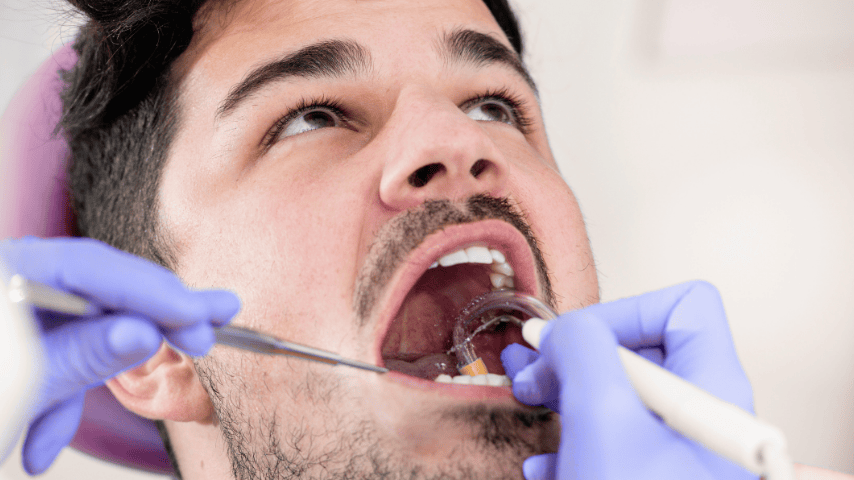
If your dentist has recommended scaling and root planing, often referred to as a “deep cleaning,” you may be wondering what it entails and why it’s necessary. Unlike a routine dental cleaning, this treatment goes below the gumline to remove hardened plaque (tartar) and bacteria that contribute to gum disease.
It’s one of the most effective ways to prevent early-stage periodontal issues from progressing into more serious problems, such as bone loss or tooth loss.
In this guide, we’ll explain what scaling and root planing is, why it’s prescribed, what the procedure feels like, and how to care for your gums afterward. Understanding the process can help ease any anxiety and prepare you for a smoother, more successful recovery.
What Is Scaling and Root Planing?
Scaling and root planing, often referred to as a “deep cleaning,” is a non-surgical treatment used to manage gum disease. It goes beyond your typical dental cleaning by targeting bacteria and plaque buildup below the gumline.
If your gums have started to pull away from your teeth or you’ve been diagnosed with early to moderate periodontal disease, your dentist may recommend this treatment to help stop the condition from getting worse.
The procedure has two main parts. First, scaling involves removing plaque and hardened tartar from beneath the gums using special tools, including ultrasonic instruments and fine hand scalers.
This buildup can’t be removed by brushing, flossing, or standard cleanings, and it’s the main cause of gum inflammation and bone loss.
Next comes root planing, where your dentist or hygienist smooths out the roots of your teeth. This step helps your gums reattach to the tooth surfaces and prevents bacteria from easily reattaching.
A smooth root surface gives your gum tissue a better chance to heal and form a tight seal around the teeth again.
Because this treatment is more detailed than a regular cleaning, it’s usually done in sections, often one or two quarters of your mouth at a time, and under local anesthesia to keep you comfortable.
Depending on your condition, your dentist might also recommend an antibacterial rinse or apply medication directly under the gums to speed healing and reduce infection.
Scaling and root planing can significantly improve the management of gum disease. It helps stop further damage, lowers your risk of tooth loss, and often helps you avoid more invasive procedures later on.
Why Dentists Recommend Deep Cleaning
Scaling and root planing (deep cleaning) is recommended when gum disease has moved beyond what a routine cleaning can fix. Here’s why your dentist might suggest this treatment and why timing is so important:
Signs that Indicate You May Need Deep Cleaning:
- Bleeding when brushing or flossing
- Red, swollen, or tender gums
- Persistent bad breath or a bad taste in your mouth
- Gum recession (your teeth look longer than before)
- Loose teeth or spaces forming between teeth
- Deep pockets between your teeth and gums (more than 4mm)
How Dentists Diagnose the Need for Deep Cleaning:
- Gum Probing: Your dentist measures the depth of the space between your teeth and gums. Anything over 4mm, especially if accompanied by bleeding, can indicate active gum disease.
- Dental X-Rays: These images reveal whether the infection has started to affect the bone that supports your teeth.
- Clinical Examination: The dentist checks for signs of plaque buildup, tartar under the gums, gum swelling, and changes in gum attachment.
Why Timing is Important:
- Gum disease gets worse over time. Delaying treatment can lead to bone loss, tooth mobility, and eventually, tooth loss.
- Deep cleaning removes harmful bacteria and buildup early, preventing the disease from causing permanent damage.
- Treating gum disease early helps you avoid more invasive procedures like gum surgery.
If your dentist recommends scaling and root planning, it’s important to schedule the procedure as soon as possible.
Early treatment makes recovery easier, protects your oral health, and helps maintain your natural teeth in the long term.
Deep Cleaning vs. Routine Dental Cleaning
Understanding the difference between a routine cleaning and a deep cleaning (scaling and root planing) helps you make informed decisions about your oral health. While both aim to remove plaque and tartar, their purposes, depths, and frequencies differ significantly.
Use this comparison to understand why your dentist may recommend deep cleaning and what to expect.
Feature |
Routine Dental Cleaning (Prophylaxis) |
Deep Cleaning (Scaling and Root Planing) |
Purpose |
Preventive care for healthy gums | Treat active gum disease (periodontitis) |
Cleaning Depth |
Above and slightly below gumline | Several millimeters below gumline (subgingival) |
Instruments Used |
Polisher, scaler, floss | Ultrasonic scaler, hand curettes |
Use of Anesthetic |
Rarely needed | Commonly used (to numb the area) |
Appointment Length |
30–45 minutes | 45–60 minutes per quadrant |
Number of Visits |
Usually completed in one session | Often split over 2–4 visits |
Frequency |
Every 6 months | As needed based on gum disease progression |
Follow-Up |
Return to regular cleanings | Move to periodontal maintenance (every 3–4 months) |
If your dentist recommends scaling and root planing, it means your gum health needs immediate attention.
Just like you wouldn’t skip a critical car repair, don’t delay deep cleaning when it’s prescribed. It’s your best chance to prevent gum disease from worsening.
Preparing for Your Appointment
Walking into a deep-cleaning visit feels less daunting when you know what to expect and how to prepare. Smart preparation also helps your dentist work more efficiently, resulting in less time spent in the chair.
Share a complete medical snapshot. Bring an updated medication list and any systemic conditions, especially heart disease, diabetes, or immune disorders, as these can influence anesthesia choices and recovery.
If you are taking blood thinners or have recently started a new prescription, please alert the team so they can coordinate with your physician if dose adjustments are needed.
Most offices schedule deep cleanings in 60- to 120-minute blocks, sometimes treating one quadrant at a time.
Because local anesthesia can linger for several hours, eat a light meal beforehand to prevent hunger later while protecting numb cheeks and lips from accidental bites.
If nitrous oxide or an oral sedative is planned, arrange a ride home in advance, as you won’t be cleared to drive.
Use This Checklist to Stay Organized:
- Inform the office of current medications, allergies, and health conditions
- Eat a light, protein-rich meal one to two hours before your visit
- Confirm whether sedation is planned and secure transportation if needed
- Reserve enough time. Plan on at least one hour per treated quadrant
- Contact your insurer for pre-authorization; most policies cover 50–80% of the fee once the deductible is met
Mental preparation matters too. If you’re anxious, ask whether a topical anesthetic can be used before injections or if calming options like nitrous oxide are available.
Knowing your comfort plan ahead of time takes the edge off. Jot down any lingering questions, such as post-op dietary restrictions or follow-up scheduling, so you leave the operatory with all the answers you need.
Step-by-Step: What Happens During Scaling and Root Planing
When you sit down for treatment, the visit unfolds in a predictable rhythm that keeps discomfort minimal and maximizes healing.
- Administering local anesthetic: First, the dentist will numb the treatment area with local anesthetic. A dab of topical gel comes before the needle so you mostly feel pressure, not pain, throughout the session.
- Using an ultrasonic scaler: With the tissues numb, an ultrasonic scaler goes to work. Its vibrating tip and cooling water spray shatter and flush away bulky calculus hidden beneath the gumline. Fine hand instruments called curettes follow, tracing every root surface until it feels smooth as glass. This “root planing” stage removes microscopic roughness where bacteria like to regroup.
- Irrigation: The dentist will rinse the pockets with an antimicrobial solution to further shrink the bacterial load. Stubborn sites may also receive a localized antibiotic gel that releases medication over several days for a head start on healing.
- Deep cleaning: Because a full-mouth deep cleaning can take 45–60 minutes per quadrant, most practices treat two quadrants per visit and schedule the opposite side for a week or two later. Once all quadrants are complete, you’ll return in roughly four to six weeks to re-probe pocket depths and confirm the gums are reattaching.
Throughout each step, you’ll mainly notice vibration, water spray, and a slight tugging sensation. By the time the anesthetic wears off, the heavy calculus is gone, the roots are polished, and your gums have the clean slate they need to heal.
Recovery Timeline: What to Expect After Deep Cleaning
Most patients return to normal activities immediately; however, your gums require time to heal fully. Knowing what’s normal at each stage helps you stay comfortable and spot problems early.
During the first few hours, local anesthetic may linger, so stick with lukewarm, soft foods and expect light oozing when you brush. Saltwater rinses ease tenderness while keeping the area clean.
By days 2–3, any bleeding should taper off. Mild soreness and temperature sensitivity are common; switch to a soft-bristled brush and take an over-the-counter pain reliever if needed.
From days 4 to 7, swelling subsides, and the gum tissue begins to tighten around the roots. You’ll notice less space between the tooth and gum as pockets shrink.
Continue gentle brushing and flossing to keep new plaque from settling. Around the two-week mark, most sensitivity fades, and probing depths often drop measurably. This is a sign that the treatment is working.
When to Call Your Dentist:
- Heavy bleeding that lasts longer than 24 hours
- Pain or swelling that intensifies after day 3
- Signs of infection, such as fever, foul taste, or pus
Mild soreness, slight gum recession, and transient sensitivity are all part of the normal healing process.
Anything that feels progressively worse instead of better deserves a prompt check-in; early attention prevents small issues from becoming serious complications.
After-Care Tips for Faster Healing and Healthier Gums
Give your gums a head start by waiting at least two hours before eating or drinking. Stick to soft, lukewarm foods like yogurt, eggs, or mashed potatoes for the first 48 hours to avoid irritating tender tissues.
Hot coffee, crunchy snacks, and spicy foods can inflame treated areas, so keep them off the menu until soreness subsides. These simple dietary changes dramatically reduce bleeding and discomfort.
Oral hygiene needs to stay gentle yet thorough. Brush twice daily with a soft-bristled brush angled 45° toward the gumline, and switch to a desensitizing toothpaste if cold or sweet foods sting.
Floss once sites feel comfortable, and rinse with warm salt water three times a day to soothe inflammation and flush away debris. If your dentist has prescribed a chlorhexidine rinse, use it exactly as directed to maintain low bacterial counts.
Lifestyle choices can either speed up or slow down the healing process. Skip tobacco and alcohol for at least 72 hours, stay hydrated with plain water (no straws), and manage soreness with ibuprofen or acetaminophen as needed.
Follow these steps consistently, and your gums should tighten, pink up, and feel normal again within a week.
Care for Your Gums and Keep Your Smile Healthy
Scaling and root planing is an essential treatment for maintaining gum health and preventing further complications, such as tooth loss.
With the right care and attention, your gums will heal and reattach to your teeth, resulting in a stronger, healthier smile.
While the procedure may sound daunting, it’s an important step in preserving your oral health for the long term.
Need help finding a dentist? Use Sunbit’s dental directory to find a trusted dental provider near you. Whether you’re ready to schedule your deep cleaning or just looking for support, you’ll find professionals ready to guide you every step of the way.