






Summary
Missing teeth can impact more than just your smile, affecting your ability to eat, speak, and feel confident. Dental implants offer a permanent solution by replacing a missing tooth’s root with a titanium post. This creates a strong, durable foundation that restores chewing power and preserves jawbone health, which other options like dentures and bridges can’t. The process, known as osseointegration, fuses the implant directly to your jawbone, providing a natural look and feel that can help you regain confidence and improve your overall oral health for years to come.
Missing teeth affect more than just your ability to chew. They can change how you speak, how you eat, and even how you feel about your smile. For many people, this leads to frustration, discomfort, and a drop in self-confidence.
Dental implants offer a long-term solution that not only brings back chewing strength but also helps you feel like yourself again.
We’ll explore how implants work, why they’re different from other options, and how they help restore both function and confidence.
What Are Dental Implants?
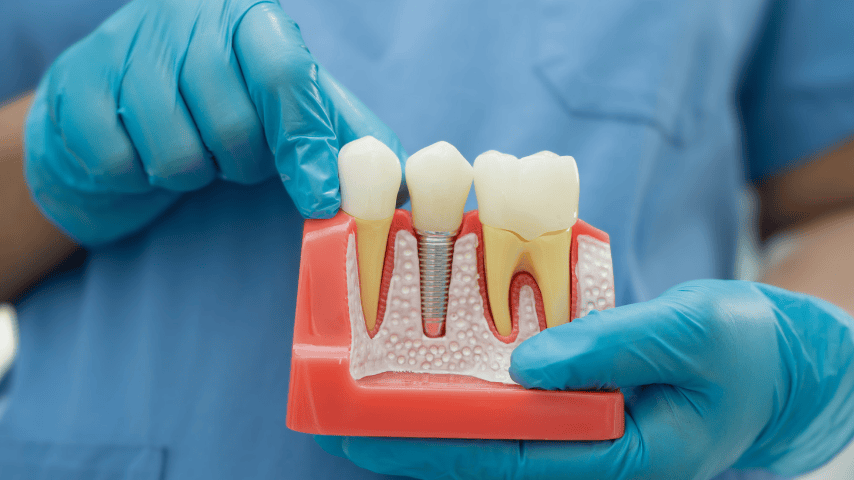
Dental implants function as a three-part permanent tooth replacement system:
- A titanium post surgically placed into the jaw as an artificial root
- An abutment connector that rises above the gumline
- And a custom crown that delivers the visible tooth restoration.
The key to implant reliability lies in osseointegration, which refers to the process by which bone cells grow tightly around the titanium post over a period of three to six months.
This biological fusion creates a foundation capable of transferring chewing forces to the jaw like a natural root. Properly placed and maintained implants achieve high success rates.
How Implants Bring Back Real Bite Strength
When you’re missing teeth or dealing with loose dentures, eating becomes a careful calculation. Simple foods like apples or steak can be more challenging because removable appliances sit on soft tissue, not bone.
This means most of your chewing force gets absorbed by your gums instead of being transferred efficiently, leaving you with weaker bite power and requiring adjustments in how you eat certain foods.
Dental implants solve this problem through direct bone integration. The titanium post functions as an artificial tooth root, fusing directly with your jawbone through osseointegration.
This creates a solid foundation that transfers bite force straight to the bone, restoring nearly full chewing efficiency. This is something traditional dentures and bridges can’t match.
Confidence Rebuilt: The Emotional Upside
Missing teeth devastate more than just eating ability. Patients describe overwhelming embarrassment, social anxiety, and even depression. The self-esteem hit runs deep. Many people stop smiling, avoid social situations, and feel like they’ve lost part of themselves.
Dental implants fix this emotional damage quickly. Because they look and feel identical to natural teeth, patients report an immediate boost in confidence. They start smiling again, speaking clearly, and engaging socially without fear.
The constant worry about dentures slipping during conversations disappears completely. No more adhesives, no more embarrassing moments, no more holding back laughter at family gatherings.
Oral-Health Perks Beyond Chewing
Dental implants do more than restore your ability to eat. They bring long-term health benefits that help protect your entire mouth.
Here’s how:
- Preserve jawbone strength: The titanium post transfers daily bite pressure directly to your jawbone, keeping bone cells (osteoblasts) active. This helps slow down bone loss after a tooth is removed, a benefit that dentures and bridges can’t provide. Without that stimulation, the jawbone may shrink, resulting in changes to facial shape and potential complications with future restorations.
- Keep teeth in place: Implants fill the gap and act as spacers, keeping nearby teeth from shifting out of alignment. This reduces the chances of needing orthodontic treatment years down the line.
- Simplify oral hygiene: Unlike bridges, implants don’t rely on nearby teeth for support. That means no special threaders or complex cleaning routines. Most patients find brushing and flossing around implants easier, which can lead to better plaque control and fewer maintenance visits.
- Protect natural teeth: Bridges often require grinding down healthy teeth to anchor the prosthetic. Implants leave your surrounding enamel untouched, preserving tooth structure and lowering the risk of decay.
- Support jaw balance and comfort: A well-placed implant creates a stable bite, helping prevent the rocking and shifting that come with partial dentures. This added stability can ease strain on the jaw joints and reduce symptoms of TMJ.
Implants vs. Dentures & Bridges: A Quick Comparison
Choosing the right tooth replacement option can feel overwhelming. Each solution has pros and cons. But when it comes to long-term comfort, durability, and oral health, dental implants often stand out.
Here’s a quick comparison to help you understand how implants measure up against dentures and bridges:
Feature |
Dental Implants |
Dentures |
Bridges |
Support |
Anchored to the jawbone | Rest on gums | Attached to nearby teeth |
Feel |
Feels like natural teeth | May shift or feel bulky | Feels stable, but not root-based |
Bite Strength |
Near-natural chewing power | Lower bite force | Moderate chewing function |
Jawbone Preservation |
Yes | No | No |
Longevity |
15–25+ years | 5–10 years | 5–15 years |
Daily Maintenance |
Brush and floss like normal teeth | Remove and soak nightly | Special flossing tools needed |
Impact on Nearby Teeth |
No impact | No impact | May require shaving healthy teeth |
Comfort While Speaking |
Stays in place | May slip or shift | Usually stable |
Facial Structure Support |
Helps maintain natural contours | Can lead to bone loss over time | Limited support |
Upfront Cost |
Highest | Lowest | Moderate |
While implants cost more initially, they can save you time, discomfort, and additional dental work in the long run. They also help preserve your bone and smile structure.
If you’re looking for a lasting solution that feels and functions like natural teeth, implants may be the right choice for you. Discuss your specific needs with your dental provider to determine the best course of action.
The Implant Journey Step-by-Step
Getting a dental implant may sound like a big procedure, but it’s more straightforward than most people expect. Knowing what to expect at each stage can help you feel more confident and prepared.
Here’s a simple step-by-step overview of how the process usually works:
1. Consultation and Evaluation
Your dental provider will start with a complete exam, review your medical history, and take digital scans of your mouth. These images help check your bone structure and show exactly where the implant can be placed. You’ll also have time to ask questions and discuss your goals.
2. Personalized Treatment Plan
Once the scans are reviewed, your dentist will create a detailed plan. This includes determining the number of implants needed, whether you’ll require additional steps such as a bone graft, and outlining the timeline.
3. Implant Placement
On the day of the procedure, a small titanium post is placed in your jawbone where the missing tooth used to be. Local anesthesia is used to keep you comfortable, and some practices also offer sedation if needed. Many people schedule this on a Thursday or Friday so they can rest over the weekend.
4. Healing and Bone Integration
Over the next 3 to 6 months, your jawbone naturally grows around the implant. This is what gives the implant its strong foundation. You’ll have a few check-ins during this time, and a temporary tooth can be placed if needed for appearance.
5. Final Tooth Placement
Once the implant has fully healed, your dentist will place a small connector (called an abutment) and take impressions to create your final crown or bridge. These are custom-made to match your smile. The crown is placed in a separate appointment, and most patients are surprised by how smooth and comfortable the process feels.
Caring for Your Implants Long-Term
Treat your implant like any natural tooth: brush twice daily with a soft-bristled brush, floss around the crown, and use non-abrasive toothpaste to avoid scratching the porcelain surface. Since implants sit independently and lack vulnerable enamel, this simple routine covers daily care.
Twice-yearly professional cleanings enable your hygienist to remove stubborn plaque and assess the health of the surrounding gum tissue. If you smoke, quit; nicotine restricts blood flow and increases peri-implantitis risk. Keep conditions like diabetes well-managed, as elevated blood sugar slows healing and invites infection.
Watch for early warning signs that require prompt attention, including persistent bleeding when brushing or flossing, tenderness, swelling, or a bad taste around the implant site, as well as any sensation of loosening.
With consistent home care and routine checkups, implants can deliver long-term success, allowing them to function comfortably for 25 years or more, providing a lifetime of confident chewing and smiling.
Who’s a Good Candidate?
Good overall health is your starting point. Candidates who manage their systemic conditions, refrain from smoking, and maintain healthy gums typically experience the best outcomes. Good circulation and tissue quality accelerate healing, providing the foundation for long-term success. You’ll also need adequate bone volume, though limited bone doesn’t automatically disqualify you.
Commitment to hygiene matters just as much. Regular dental visits correlate with higher implant knowledge and better long-term success rates. Your dental team will outline a clear maintenance plan before treatment begins, so you know exactly what to expect.
Age rarely becomes a barrier. Adults aged 65-74 represent one of the fastest-growing implant demographics, and modern techniques continue to deliver excellent success rates, even in older bone. The real concerns are unmanaged diabetes, active gum disease, or medications that compromise your immune system.
Advanced imaging, digital planning, and surface-enhanced implants have significantly expanded eligibility. Don’t assume you’re not a candidate based on age or previous dental issues. A thorough consultation and CBCT scan will quickly confirm whether standard implants, graft-assisted placement, or an alternative approach is best suited for your specific anatomy and health status.
Know What to Expect Before You Commit
Dental implants are a long-term investment in your health and confidence. While the cost can be steep, depending on your specific needs, many patients find the durability and natural feel well worth it.
If you’re considering implants, take the time to understand the basics, such as what osseointegration means or when a bone graft might be necessary. The more you know, the more confident you’ll feel about your next steps.
Have questions? Reach out to your dental provider to discuss your options and what your treatment plan might look like. To find trusted dental professionals near you, explore Sunbit’s dental directory.