


Summary
This guide walks through why treatment plans stall, the levers that move conversion, and the one step that’s easy to overlook: making sure the patients who say yes can actually get approved to pay.

Every dental practice presents more treatment than it completes. The gap between what’s diagnosed and what actually gets done (e.g. the treatment plans that stall, get deferred, or quietly disappear) is where a huge amount of production leaks out. Closing that gap is often faster and cheaper than finding new patients.
This guide walks through why treatment plans stall, the levers that move conversion, and the one step that’s easy to overlook: making sure the patients who say yes can actually get approved to pay. It builds on our overview of dental practice profit margins.
Why treatment plans stall
When a patient doesn’t move forward, it rarely means they didn’t want the care. According to the 2026 State of Dental by Sunbit report, nearly two-thirds of patients (61%) cite cost as the main reason they delay or decline treatment. But cost alone isn’t the whole story. The same research found that what separates thriving practices from stagnant ones isn’t whether patients can afford care, it’s whether they believe they have options.
Plans tend to stall for a handful of recurring reasons:
- Sticker shock — the total is presented without a payment path alongside it.
- Financing introduced too late — only after the patient objects to price, when the conversation has already turned negative.
- Declines at the finish line — the patient says yes, then a financing application is denied and the plan dies.
- No follow-up — deferred plans sit in the system with no structured recall.
The biggest lever: present financing proactively
Timing changes everything. The State of Dental data is striking here: practices that present financing options proactively, in pre-appointment communications, new-patient paperwork, or the first treatment-plan discussion, see a 55% lift in case acceptance compared with practices that only raise financing after a patient brings up cost.
The mechanism is simple. When financing is framed as a normal part of the care experience rather than a reaction to a price objection, the patient never has to hit an emotional wall. The plan and the path to pay for it arrive together, so “yes” stays on the table.
Reframe the momentInstead of: present the plan → wait for the cost objection → scramble for a payment option.Try: present the plan and the payment options together, as one conversation. Financing becomes part of how you deliver care, not a rescue after the patient hesitates. |
The overlooked lever: approvals
Here’s the step that quietly kills conversion even in practices that do everything else right. A patient can accept a plan, sit in the chair ready to proceed, and still not start if their financing application is declined. If your financing partner approves only 60–65% of applicants, a large share of hard-won acceptances never convert to production.
Broader approvals close that leak. Sunbit approves 87% of applicants, including patients above a 500 credit score that prime-only lenders routinely decline, with no hard credit check.* Restoration Smiles, for example, saw case acceptance climb from 50% to 95% after prioritizing a higher-approval financing experience — and added over $100,000 in production in the first six months.*
Build a conversion system
Put the levers together into a repeatable process rather than a series of one-off saves:
- Introduce financing before the treatment plan discussion, not after.
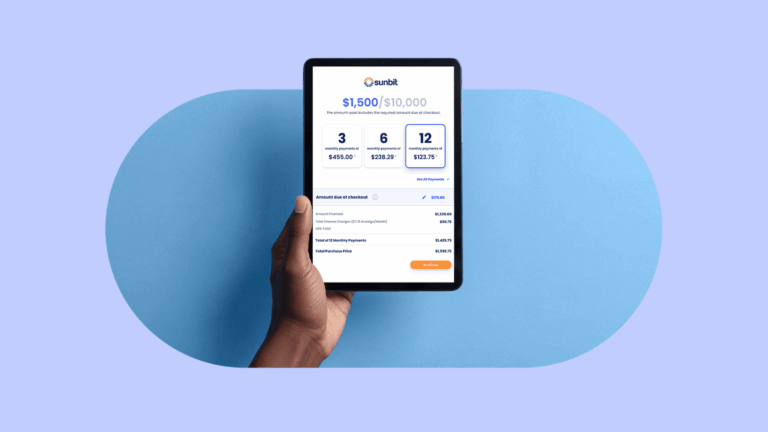
- Present total cost and monthly payment options side by side.
- Use a high-approval partner so acceptances actually convert.
- Follow up on every deferred plan with a structured recall cadence.
Frequently asked questions
What is a good case acceptance rate for a dental practice?
There’s no single benchmark, but the trend matters more than the number. In the 2026 State of Dental by Sunbit report, 54% of practices saw case acceptance rise year over year, and proactive financing conversations drove a 55% lift versus raising financing only after a cost objection.
How do I get more patients to accept treatment?
Present financing proactively and early, show total cost alongside monthly payments, use a high-approval financing partner so acceptances aren’t lost to declines, and follow up consistently on deferred plans.
Why do patients decline dental treatment?
Cost is the leading reason (61% of patients cite it as their main obstacle) but research shows the deeper issue is whether patients believe they have workable payment options, not simply whether they can afford care.
How does financing approval rate affect case acceptance?
A patient who accepts a plan but is then declined for financing doesn’t convert. Higher approval rates keep more accepted treatment moving forward, which is why approval rate is effectively a case-acceptance lever.
Stop losing accepted treatment to declines. Sunbit’s 87% approval rate keeps more of the cases your team works hard to present moving forward. See how Sunbit compares → |
*Approval rate reflects Sunbit dental program performance and is subject to approval based on creditworthiness. Individual practice results, including case studies cited, vary. Loans are made by Transportation Alliance Bank Inc. dba TAB Bank, which determines qualifications for and terms of credit.